

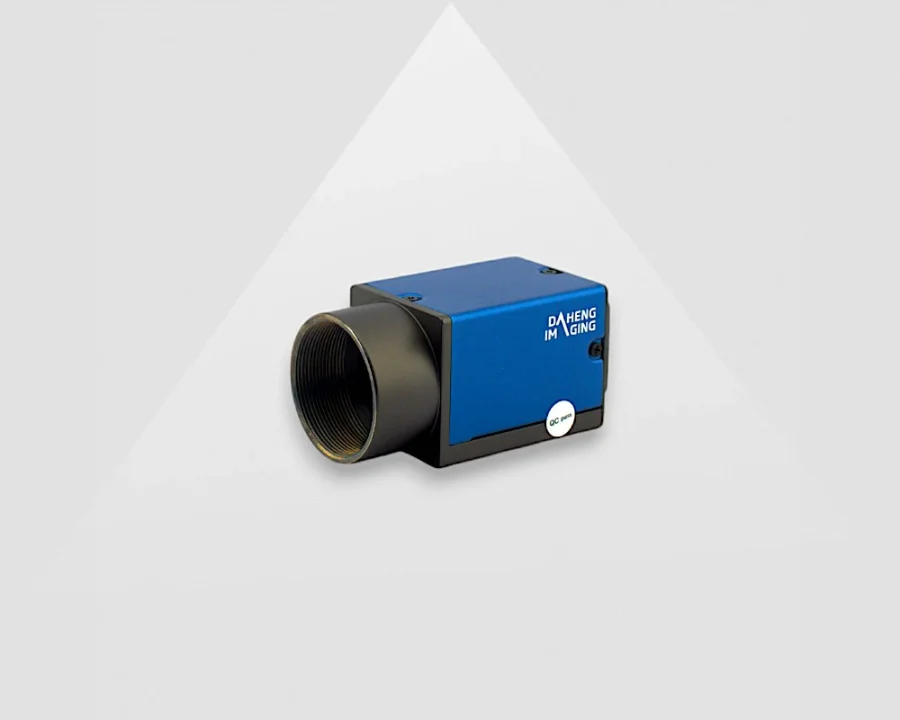
Revolutionising the way we acquire and handle visual data, GigE cameras have become a strong and flexible solution in the field of industrial imaging and machine vision. From manufacturing and quality control to scientific research and security applications, these creative imaging devices using Gigabit Ethernet technology for data transfer have fast become a mainstay in many sectors. This thorough investigation of GigE cameras will cover their characteristics, advantages, and many uses, hence stressing why they have become a must in contemporary imaging systems.
Essentially, a GigE camera is a digital camera using Gigabit Ethernet technology for quick data transport. A GigE camera may so swiftly and effectively send significant amounts of visual data across regular Ethernet networks. Among its benefits, Ethernet technology is compatible with current network infrastructure, reasonably priced to adopt, and allows lengthy connection lengths. These elements have greatly influenced the common use of GigE cameras in many sectors and uses.
GigE cameras’ capacity to send data over great distances without signal deterioration is one of its main benefits. Unlike certain other interface methods, GigE cameras can preserve high-quality image transmission over cable lengths of up to 100 metres utilising regular CAT5e or CAT6 Ethernet connections. In industrial environments where cameras would have to be placed far from the processing units or in applications needing dispersed imaging systems, this feature is especially useful.
GigE cameras’ fast data transfer speeds are another important characteristic. Gigabit Ethernet technology allows these cameras to theoretically send data at rates of up to 1000 Mbps (125 MB/s). A GigE camera is perfect for uses needing real-time imaging or the recording of fast-moving items since this high bandwidth enables the quick transmission of high-resolution photos and video streams. GigE cameras have become popular in sectors like automated inspection, traffic monitoring, and sports analysis because of their capacity to manage big data quantities effectively.
GigE cameras are also quite flexible and scalable in addition. Standard Ethernet protocols let several GigE cameras be simply integrated into one network, hence enabling the building of sophisticated, multi-camera imaging systems. In applications needing synchronised image acquisition from several viewpoints or the surveillance of vast areas, this scalability is especially useful. Moreover, the growing use of Ethernet technology allows for simple integration of GigE cameras with current network infrastructure, hence lowering deployment costs and streamlining system design.
GigE cameras’ adaptability with a great variety of software and hardware systems is among its most notable benefits. Defining the communication protocol for GigE cameras, the GigE Vision standard guarantees compatibility across software, accessories, and cameras from several manufacturers. This standardisation has created a vibrant ecosystem of interoperable goods and solutions, allowing customers the freedom to select the finest components for their particular application without being bound into a single vendor’s ecosystem.
Regarding image quality, GigE cameras perform exceptionally well in a broad spectrum of imaging settings. Available with several sensor types, including CMOS and CCD, modern GigE cameras can handle resolutions from simple VGA to ultra-high-definition 4K and beyond. Whether it’s high-speed capture, low-light performance, or exact colour reproduction, this adaptability lets users choose a GigE camera that fits their particular image needs.
GigE cameras’ strength and adaptability have made them popular in a wide range of uses. GigE cameras are commonly used for automated inspection jobs in manufacturing and quality control, hence enabling fault detection and product quality assurance with great accuracy and speed. GigE cameras are perfect for 3D inspection and measurement since they can be readily integrated into one system, allowing for a complete picture of an item from many perspectives.
GigE cameras have found use in scientific study in fields including microscopy, astronomy, and life sciences. GigE cameras are well-suited for capturing and studying complicated biological processes or distant astronomical objects because of their great data transfer rates and exceptional image quality. GigE technology’s lengthy cable lengths let researchers place cameras in difficult settings while keeping a safe distance for workers and sensitive equipment.
Another field where GigE cameras have greatly advanced is security and surveillance. GigE cameras are a great option for large-scale surveillance systems since they can send high-quality video over great distances and combine several cameras into one network. From traffic flow control to industrial site security to public space surveillance, GigE cameras offer the performance and adaptability required to produce efficient and scalable security solutions.
GigE cameras are being used more and more in sports and entertainment for virtual reality content generation, broadcast production, and motion analysis among other uses. GigE cameras are perfect for capturing fast-moving action and delivering real-time feedback to athletes and coaches because of their low latency and high frame rates. In broadcast settings, the capacity to quickly incorporate GigE cameras into current IP-based processes has made them a preferred choice for studio and live production uses.
Though they have many benefits, GigE cameras have several drawbacks consumers should know. In high-bandwidth applications, one possible disadvantage is the CPU overhead needed to handle incoming data streams, which might be considerable. Dedicated network interface cards or shifting processing duties to GPUs or specialised hardware can help to offset this problem, nevertheless.
Working with GigE cameras also involves network management and configuration. Achieving best performance depends on the configuration of network characteristics including jumbo frames and packet size. In multi-camera systems as well, prudent network traffic management is essential to prevent bandwidth congestion and guarantee consistent image delivery.
GigE cameras are probably going to perform and function better as technology develops. Faster Ethernet standards like 10 Gigabit Ethernet are already paving the way for even greater bandwidth GigE cameras able to send ultra-high-resolution photos and video streams. Advancements in sensor technology and image processing algorithms are also always pushing the limits of what is feasible in terms of image quality, sensitivity, and dynamic range.
To sum up, GigE cameras have shown to be a strong and flexible option for a wide range of image uses. From industrial and scientific research to security and entertainment, their mix of high performance, adaptability, and affordability has made them a popular choice across sectors. GigE cameras are set to play an ever more significant part in forming the future of industrial imaging and machine vision as the technology develops. GigE cameras provide a convincing solution that can satisfy the needs of the most demanding imaging applications of today whether you are building a large-scale surveillance network, constructing an automated inspection system, or pushing the frontiers of scientific imaging.