

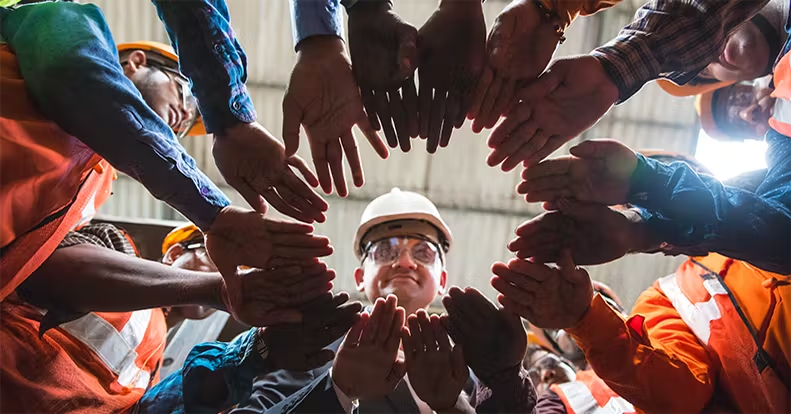
A robust safety culture is the foundation of any successful organisation. It’s more than just checking boxes and following laws; it’s about instilling a shared belief system in which everyone feels accountable for their own and others’ safety. Achieving this demands a proactive and ongoing effort, with staff training playing a critical role in driving safety culture improvement. Organisations may establish a working environment in which accidents are reduced and employee well-being is prioritised by providing them with the knowledge, skills, and attitudes required to prioritise safety.
Safety culture improvement is a journey, not a destination. It is about transitioning from a state of mere compliance to one in which safety is integrated into all aspects of the business. This transition necessitates a fundamental adjustment in thinking, from simply following regulations to actively detecting and minimising risk. Effective staff training is the driving force behind this transformation.
One of the most important contributions of staff training to safety culture improvement is increased danger awareness. Employees can learn to detect possible risks in their workplaces through customised training programs. This involves more than just identifying visible threats; it also entails understanding the underlying causes of accidents and developing a keen eye for spotting prospective problems before they escalate. This increased knowledge is critical for creating a proactive safety culture in which everyone takes an active role in preventing accidents.
Beyond hazard assessment, staff training is critical for providing employees with the skills and knowledge they need to effectively manage risks. This could include machine safety training, instruction on how to utilise personal protective equipment (PPE), or emergency response techniques. Organisations encourage their employees to take ownership of their safety and actively contribute to safety culture improvement by delivering practical, hands-on training. This practical application of information is critical for transforming theory into real-world safety practices.
Technical proficiency and danger knowledge are important components of safety culture improvement, but they are not the only factors. It also includes the cultivation of a good safety mindset. Training programs can play an important role in instilling a sense of shared responsibility for safety by encouraging employees to look out for one another and report potential hazards without fear of repercussions. This open communication is critical for fostering a culture of trust and openness, in which safety concerns are addressed quickly and effectively.
Effective staff training for safety culture improvement must be adapted to the needs of the company and its personnel. A generic, one-size-fits-all approach is unlikely to provide significant outcomes. Training programs should be tailored to meet the specific dangers and risks that exist in the workplace, taking into account the various roles and responsibilities of different employee groups. This individualised approach guarantees that the training is relevant, interesting, and impactful, resulting in more successful safety culture improvement.
Regular refresher training is also required to maintain a good safety culture. Complacency can pose a serious threat to safety, therefore regular training reinforces essential safety messages, keeps personnel up to date on new legislation and procedures, and allows them to renew practical skills. This continuing investment to staff training displays a dedication to safety culture improvement and helps to keep safety at the forefront of everyone’s minds.
Furthermore, effective safety culture improvement requires active employee participation. Training programs should stimulate interaction, discussion, and criticism, allowing employees to share their experiences and help to establish safer working practices. This participatory approach not only improves learning, but it also develops a sense of ownership and encourages employees to become active change agents in the quest of safety culture improvement.
Evaluation and continual improvement are also essential components of any effective safety training program. Organisations should routinely evaluate the success of their training activities, solicit employee feedback, and monitor safety performance indicators to find areas for improvement. This data-driven method enables continual adjustment of training programs, ensuring they remain relevant, impactful, and contribute successfully to safety culture improvement.
Investing in employee training for safety culture improvement is not only a regulatory need; it is also a sensible business choice. A robust safety culture reduces accidents, lowers insurance rates, increases productivity, and boosts employee morale. Employees who feel protected and respected are more likely to be engaged and productive, which contributes to the organisation’s overall success.
To summarise, staff training is more than just a component of a strong safety program; it is the foundation of ongoing safety culture improvement. Organisations that invest in comprehensive, targeted, and continuous training can empower their workforce to create a safer, healthier, and more productive working environment for everybody. This commitment to safety culture improvement not only protects employees but also adds to the organization’s overall positive and prosperous future. The journey to a really safe working environment is ongoing, and staff training is the motor that propels this critical progress.