
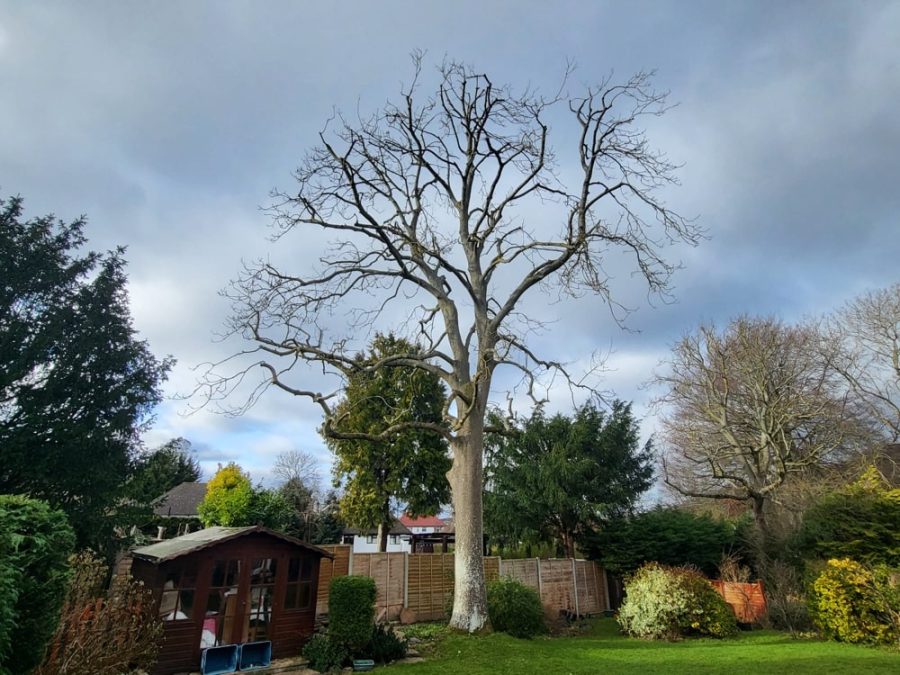
Mature trees are amongst the most valuable features of any residential or commercial property across Cheshire and its surrounding regions. They offer natural shade, establish privacy, host local wildlife, and add immense aesthetic charm to gardens and grounds. However, as trees grow over decades, their canopies can expand beyond the capacity of their immediate environment. When a canopy becomes overly large, dense, or top-heavy, it may pose risks to structural stability, block natural sunlight, or threaten surrounding buildings and overhead utility lines. Managing large trees requires specialised knowledge, precise techniques, and an understanding of arboricultural biology. One of the most effective and widely recognised techniques for maintaining tree health while managing size is professional crown reduction.
Understanding Crown Reduction and Its Importance
Crown reduction involves decreasing the overall height and spread of a tree canopy by selectively pruning the outer ends of branches back to suitable growth points. Unlike aggressive practices like tree topping, which can severely damage a tree and lead to decay, proper crown reduction preserves the natural framework, structural integrity, and aesthetic character of the tree. The primary goal is to achieve a smaller, balanced, and healthy canopy that maintains a natural appearance while reducing weight and wind resistance.
Properties situated in Cheshire, as well as neighbouring areas extending toward North Wales, frequently feature established oaks, sycamores, ashes, and beeches. These impressive species add distinct character to the landscape but require ongoing maintenance. Attempting to manage such vast specimens without expert training can result in severe structural imbalance, accelerated decay, or immediate property damage. Engaging professional tree surgeons in Wrexham and surrounding localities ensures that pruning cuts are made with precision, respecting British Standards for tree work (BS 3998) and supporting long-term tree health.
Enhancing Safety and Protecting Property Infrastructure
One of the main reasons property owners seek crown reduction is to mitigate hazards associated with oversized or top-heavy trees. Over time, heavy limbs extending over roofs, garages, driveways, or public pavements present an escalating risk. During severe storms or periods of high winds, overgrown branches are prone to snapping, which can lead to costly structural damage or safety hazards for occupants and passersby.
By systematically reducing the height and lateral spread of the canopy, crown reduction significantly lessens the lever arm force exerted on major limbs and the trunk during stormy weather. This process, often referred to as reducing the wind sail area, allows strong gusts to pass through and over the tree with less resistance, thereby decreasing the likelihood of major branch failure or complete uprooting.
In addition to storm protection, overgrown canopies frequently encroach on gutters, roof tiles, and chimney stacks. Constantly rubbing branches can dislodge tiles, clog drainage systems with falling leaf debris, and create damp conditions on timber framework. By establishing appropriate clearances, crown reduction protects buildings and adjacent structures without requiring the drastic measure of complete tree removal. Homeowners seeking guidance on balancing property safety with landscape preservation frequently rely on professional tree surgeons in Chester to evaluate structural risks and implement precise crown management plans tailored to specific property layouts.
Promoting Tree Longevity and Health
Far from being a purely aesthetic procedure, crown reduction offers significant biological benefits that support long-term tree vitality. When a canopy becomes exceptionally dense, internal foliage is often starved of light and fresh air movement. This lack of circulation creates a microclimate conducive to fungal infections, pest infestations, and localised branch dieback.
Carefully executed crown reduction allows increased light penetration and air movement throughout the inner canopy. Improved airflow dries leaf surfaces more quickly after rainfall, reducing the spread of fungal spores and foliar diseases. Furthermore, removing heavy, declining, or damaged branches redirects the tree’s energy reserves toward healthier limbs, encouraging robust and balanced future growth.
Crucially, the success of crown reduction relies on making clean, accurate cuts at proper growth points, known as branch bark ridges and collars. Incorrect cuts can leave open stubs that fail to callus over, leaving the inner wood vulnerable to decay-causing fungi. Qualified specialists possess the scientific understanding required to determine exactly how much material can be safely removed—typically no more than twenty to thirty percent of the live crown in a single season—ensuring the tree recovers rapidly and maintains its natural vitality.
Optimising Light Levels and Outdoor Living Spaces
An overgrown tree can dramatically alter the microclimate of a garden. As canopies expand, they often cast deep shadows over lawns, flower beds, patio areas, and interior living spaces. Lawns situated beneath dense canopies frequently become sparse, moss-ridden, and unhealthy due to a lack of sunlight and constant competition for ground water.
Crown reduction offers an ideal compromise for property owners who wish to retain the benefits of mature foliage without living in perpetual shade. By reducing the outer boundary of the canopy, sunlight can reach surrounding garden areas and window frames at broader angles throughout the day. This increase in natural illumination revives lawn turf, promotes healthier growth in understory shrubs, and creates far brighter, more pleasant outdoor seating areas.
Unlike complete removal, which permanently alters the ecosystem of a garden and removes shade entirely, crown reduction provides controlled light management. Properties throughout Cheshire and nearby boundary regions benefit immensely from this nuanced approach, keeping outdoor spaces light and welcoming while preserving the privacy, screening, and cooling effects that mature trees naturally afford.
Maintaining Visual Harmony and Kerb Appeal
Beyond practical safety and health benefits, visual appearance plays a vital role in property presentation and value. A neglected tree that has grown out of proportion with its surroundings can dominate a landscape, making a garden feel cramped, cluttered, or dark. Conversely, an excessively pruned or topped tree looks stark and disfigured, taking years or even decades to recover a natural shape.
Professional crown reduction focuses heavily on aesthetic proportion. Trained arborists evaluate the species, growth habit, and overall landscape context before making any cuts. The goal is to produce a scaled-down version of the tree that retains its characteristic silhouette and natural elegance. A well-proportioned canopy frames a property beautifully, adding structure, maturity, and kerb appeal.
Whether managing a formal estate, a suburban garden, or a commercial plot, maintaining well-kept trees reflects attentive property care. Collaborating with professional tree surgeons in Wrexham allows property owners to manage substantial trees located near boundary lines or shared access routes, ensuring that hedges and mature canopies remain neat, attractive, and non-intrusive to neighbouring plots.
Environmental Preservation vs. Tree Removal
Tree removal should generally be viewed as a last resort when a specimen is dead, dangerously unstable, or causing severe structural damage to foundations. Mature trees play an invaluable environmental role by absorbing carbon dioxide, filtering air pollutants, managing groundwater runoff, and providing essential habitats for birds, insects, and small mammals.
Crown reduction serves as a sustainable alternative that allows mature trees to coexist safely alongside modern residential developments. By managing the physical size of the canopy, property owners can retain established trees that might otherwise be marked for fell. Preserving mature specimens maintains local biodiversity and supports green corridors across residential communities. When faced with difficult decisions regarding large trees close to boundary walls or historic buildings, consulting professional tree surgeons in Chester ensures that all preservation options are thoroughly explored before considering removal.
The Value of Professional Assessment and Execution
Pruning mature trees at height involves significant physical risk and requires specialised equipment, including rigging systems, ropes, harnesses, and precision cutting tools. Performing tree work without formal training increases the likelihood of accidental injury, property damage, or irreversible harm to the tree itself.
An expert arborist performs a comprehensive site assessment prior to commencing work, inspecting the tree for signs of internal decay, structural weakness, pest activity, or nesting wildlife. Furthermore, professional operators are fully versed in local planning regulations, including Tree Preservation Orders and Conservation Area restrictions, which frequently apply to properties across Cheshire. Obtaining necessary permissions and conducting work in accordance with legal and environmental standards ensures complete peace of mind for the property owner.
Conclusion
Investing in professional crown reduction is one of the most effective strategies for maintaining the safety, health, and beauty of mature trees across properties in and around Cheshire. By carefully scaling back canopy size, homeowners can protect nearby structures from storm damage, enhance natural sunlight across lawns and living spaces, and support the long-term biological health of valuable arboricultural assets. Relying on qualified specialists ensures that every cut is made with care, precision, and respect for natural growth patterns, allowing magnificent mature trees to thrive safely alongside modern property living for generations to come.
Get in Touch:
JD Tree Services Wrexham – Arborist and Tree Surgeons
Unit 1 D, Alyn Industrial Estate, Cefn-y-bedd, Gwersyllt, Wrexham LL12 9YG, United Kingdom
01978 467024
tree-surgeons-wrexham.co.uk
JD Tree Services Chester – Arborist and Tree Surgeons
West Business Park, Chantry Court, Sovereign Way, Chester CH1 4QN, United Kingdom
01244 455863
tree-surgeons-chester.co.uk