
In the complicated world of industrial engineering and manufacturing, some parts are very important to how well and reliably machines work as a whole. Out of these important parts, O-rings stand out as being used in a wide range of situations. When these clever circular seals are in place, they stop fluids and gases from leaking, making sure that different systems work smoothly. You can’t say enough good things about O-rings because they are essential for improving performance, extending the life of tools, and preventing problems.
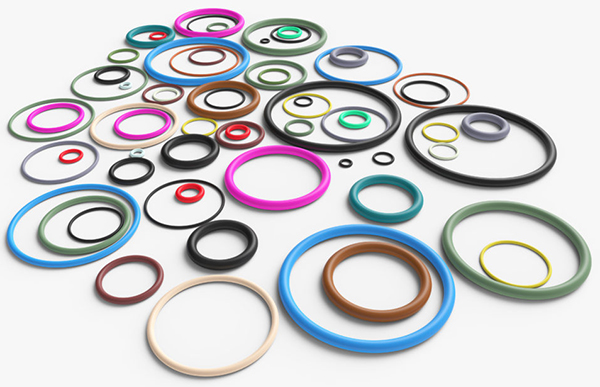
At their core, O-rings are simple but effective ways to seal things. They are usually made of flexible materials like silicone, rubber, or fluorocarbons. They have a toroidal shape, also called a doughnut shape, which lets them make a tight seal when pressed between two surfaces. Depending on the use, O-rings can fit into grooves that are lined up with the mating surfaces, making a strong shield against outside influences. Because of this design, O-rings can still work in a wide range of temperatures and pressures, which makes them essential in many industry settings.
The automobile industry is one of the main ones that benefits from O-rings. From engines to hydraulic systems, vehicles have many parts that need reliable sealing options. When it comes to fuel systems, O-rings keep leaks from happening that could be dangerous. Also, they help keep the pressure in the cooling systems of cars and trucks and stop fluid loss. These systems would break down a lot more often without O-rings, which would mean higher upkeep costs and less safe vehicles.
In the areas of aerospace and aviation, O-rings are also very important. In these high-stakes fields, failure is not tolerated at all, so the dependability of parts is very important. The fact that O-rings can work in harsh situations is especially useful in places like fuel tanks, hydraulic systems, and different engine parts. When O-rings are used in aerospace, the materials are often carefully made to withstand high temperatures and corrosive environments. This makes sure that the rings not only work well under pressure but also don’t break down over time.
In factories, O-rings are used in almost all hydraulic and gas systems. They are needed for valves, cylinders, and motors to work, which makes it easier for fluids and gases to move around inside machines. Because these systems have O-rings, they can keep the right pressure without letting leaks happen that could affect their safety and usefulness. You can’t say enough good things about how important O-rings are in hydraulic uses. If they fail, it could mean lost production time and serious safety risks for workers.
The food and drink business also relies on O-rings’ durability and effectiveness a lot. In processes where cleanliness and avoiding contamination are very important, O-rings make sure that seals are tight and work well, stopping any leaks that could cause safety issues or food to go bad. They are used in many pieces of machinery, like pumps, valves, and mixers, to help keep the goods being processed clean and secure. The materials that are used to make O-rings for food applications are carefully picked because they follow health and safety rules. This makes sure that they don’t put customers at risk.
When it comes to making energy, O-rings are very important in both traditional and renewable energy sources. O-rings keep seals in place at high pressures in steam and gas engines in fossil fuel power plants. In the green energy sector, O-rings are also used in wind turbines and hydropower plants. These facilities need reliable seals to keep hydraulic systems from leaking. Because O-rings can be used in so many different ways, they are very useful in these fast-paced industries where dependability and speed are important for long-term operations.
In addition, O-rings play an important but often overlooked part in many consumer goods, from electronics to appliances. A lot of home appliances, like freezers and washing machines, use O-rings to make sure that seals stay tight and don’t let water and refrigerants leak out. It’s amazing how bad things can get when an O-ring fails in everyday items, showing how important they are in even the most basic situations.
You should know that using O-rings is not only useful, but it can also help make processes more environmentally friendly. Utilising O-rings, which are excellent at sealing, businesses can cut down on waste caused by leaks and boost their overall energy economy. This is especially important in fields that are working towards sustainability more and more, because wasting resources costs money and hurts the environment more.
Because technology is always getting better, the way O-rings are designed and made has also changed over time. These days, the modern O-ring can be changed in size, material, and stiffness to fit different uses and conditions. Now, companies can make O-rings that can handle more than just liquids and gases. They can also handle harsh chemicals, high temperatures, and high pressure. With this level of flexibility, they can be used in more situations, which helps businesses improve their performance while lowering operational risks.
One important thing to consider when choosing O-rings is how well they work with different types of media. Chemical and physical qualities of different materials are very important for making sure that the O-ring works properly in its intended use. Manufacturers often choose O-ring materials based on how they will be used, how they will be exposed to the environment, how much stress they can handle, and the qualities of the fluids or gases that will be used. For example, Viton O-rings are often used in places where they will be exposed to harmful chemicals, while silicone O-rings are often chosen for places where they need to be thermally stable.
Also, the fact that O-rings are easy to make makes them very popular. It is easy to install and maintain because it has a toroidal shape, which is helpful in fast-paced industrial settings where time is of the key. It can be expensive to have to shut down equipment to fix or replace seals. Because O-rings are easy to change, they increase productivity and lower operational challenges.
Even though they aren’t very big, O-rings are very important parts that keep tools and systems safe and working well in many fields. Using high-quality O-rings has huge effects on your bottom line. They help stop leaks, which lowers upkeep costs, downtime, and the chance of catastrophic failures. When machinery works under tight limits and pressures, the failure of a single O-ring can have huge effects. This is why buying good O-rings is a necessity and not a nice-to-have.
Speaking of which, O-rings are very important parts for many different industrial uses; they are the unsung stars of sealing technologies. Their design, versatility, and important use in many fields, from aircraft to automotive and more, show how important they are as basic parts for making sure safety and reliability in operations. As businesses continue to change and adapt, O-rings will stay at the forefront of engineering solutions that can keep up with the needs of today’s technology. Their ability to improve performance, cut down on waste, and ensure safety solidifies their place as essential parts in industrial settings, highlighting the need for using premium seals in engineering design and maintenance.