

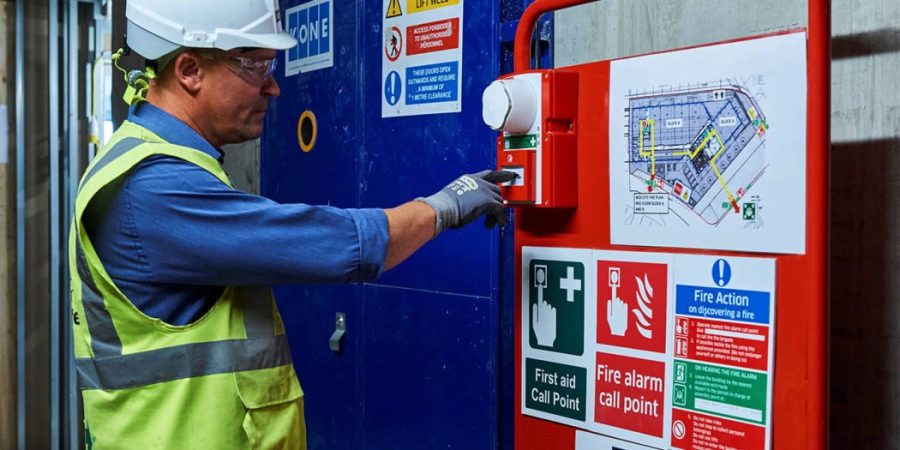
On any construction project, keeping the area safe to work in is very important. Because these places are always changing and can be dangerous, they need strong safety measures. One of the most important are fire monitoring and alarm systems that work. It is essential to ensure the quick and safe evacuation of personnel in the event of a fire, so knowing where construction site fire alarms are located is not just a matter of compliance. If you’re looking for construction site fire alarms, this piece has everything you need to know. It talks about the different types, where they usually go, and how important it is for everyone to be familiar with them.
Before you can figure out where construction site fire alarms are located, you need to know about the different kinds of alarm systems that might be used on a construction site. Permanent buildings usually have hard-wired and built-in fire warning systems, but construction sites often use temporary or semi-permanent solutions. This can be anything from simple call buttons that you have to press by hand to more complex wireless or responsive systems. Most people use manual call points because they are the most basic and common type. These are usually bright red boxes with a button or break-glass mechanism that makes an alarm sound when pressed. The first step in finding construction site fire alarms is to know what they look like.
There may be more complex systems that have smoke or heat detectors that are connected to a main control panel and sounders. These tools let you know about a possible fire earlier. Wireless systems are becoming more popular on bigger or more complex construction projects because they allow for more placement options and cut down on the need for a lot of cables. When an alarm goes off, addressable systems send exact location information, which can be very helpful for finding the cause of a fire. Knowing what kind of construction site fire alarms are being used on a certain site will help you figure out where the activation points and sounders are most likely to be.
Regulatory requirements, risk assessments, and the particular layout and activities of the construction site all play a role in where construction site fire alarms should be installed. In the UK, health and safety laws require that there are enough fire safety measures in place, such as fire detection and alarm systems. At the start of a project and on a regular basis, risk assessments find areas with a high risk of fire and advise on where and what kind of fire safety equipment, such as construction site fire alarms, should be put in those areas.
Most of the time, manual call points will be placed in appropriate places around the site. Often, these are:
At all doors from buildings or work areas, making sure that employees can easily set off an alarm as they leave.
On escape routes: Making sure that alarm points are easily reachable along marked escape routes.
In high-risk areas, like welding bays, places where flammable materials are stored, and places where temporary electrical connections are being made.
At site entrances and muster points: letting alarms go off when people arrive or when they get close to marked meeting places.
Another important thing to think about is the distance between human call points. To make sure that a warning can be quickly set off from anywhere on the site, regulations and best practices often say how far apart call points can be. The fire risk assessment and the way the place is laid out will decide how far apart the posts should be. Therefore, it is crucial to take these strategically put locations into account when looking for construction site fire alarms.
Audible alarms, like sirens or sounders, will be placed so that the warning can be heard clearly from anywhere on the construction site, taking into account the noise levels that may be caused by the work itself. When the site is bigger, flashing beacons or other visual alarms may also be used, especially in noisy places or for people who have trouble hearing. People who work on building sites will be able to tell when a fire alarm has gone off if they know where these sounders are usually placed.
For systems with monitors, they will be put in places known to have a higher chance of starting a fire, like temporary housing blocks, site offices, canteens, and places where flammable materials are stored. The risks will determine the type of device that is used. For example, heat detectors may be used in dusty places where smoke detectors might go off too often. For complete fire safety knowledge, it is essential to comprehend the role of these detectors in the overall construction site fire alarms system.
Effective communication and training are crucial in addition to the actual placement of construction site fire alarms. It is important that everyone working on the building site knows where all the fire alarms are and what to do if an alarm goes off. People should be given this information during site orientations and it should be emphasised in monthly safety briefings and on signs. The location of construction site fire alarms and escape routes must be clearly marked with large, noticeable signs. All workers, no matter what language they speak or where they come from, should be able to see and understand these signs.
The locations of all construction site fire alarms, muster points, and emergency contact information should be made abundantly clear in site safety plans and processes. All staff should be able to easily view these documents, and they should be kept up to date whenever the layout of the site or the fire safety systems are changed. Even though they might be annoying, workers need to go through regular fire drills to get used to the sound of the alarm and the evacuation procedures, such as how to get to marked muster points from different parts of the site. The value and location of construction site fire alarms are also highlighted by these drills.
The site management is also in charge of making sure that the construction site fire alarms are easy to find and use. The fire alarm system needs to be checked and fixed on a regular basis to make sure it works. Fire alarm call points or sounders should not have anything blocking them. Any damage to the system should be reported right away so it can be fixed.
In conclusion, finding construction site fire alarms is a complex process that requires knowledge of the different types of systems being used, their usual placement based on rules and risk assessments, and making sure that everyone is properly trained and informed. On any building site, an effective fire safety plan must include clear signs, easy-to-find safety plans, and regular drills. Construction sites can greatly improve the safety and health of all workers by making it a top priority to learn where and how to use construction site fire alarms. Not only is it necessary to know how to use these important safety tools, it’s also an important part of having a responsible and safe work culture in the construction business. It can make the difference between a minor incident and a major disaster to be able to quickly find and set off construction site fire alarms and to know when one has been set off. Due to this, it is very important that the importance and location of construction site fire alarms are constantly emphasised on all construction projects.