
The transformation in our perception and utilisation of residential spaces has initiated a subtle revolution in interior design, emphasising personal expression, excellence, and an ideal harmony. The growing prevalence of ordering bespoke joinery is at the centre of this trend. Homeowners are progressively shifting their preference from mass-produced furniture and standard fixtures, acknowledging that only bespoke wood pieces can effectively optimise space, embody individual style, and serve as a lasting investment. The desire for a more thoughtful, sophisticated, and functional living space is at the heart of the choice to specify bespoke joinery.
The allure of bespoke joinery stems from the idea of personalisation. Standard furniture is crafted to accommodate an average space, frequently leading to unused corners, awkward voids, or diminished storage capacity. The precise dimensions, architectural features, and functional requirements of a particular room are taken into consideration when designing bespoke joinery. This is especially apparent in the fabrication of custom cabinets. In a kitchen setting, for example, a cabinet maker can construct units that extend exactly from floor to ceiling, utilising every vertical inch of storage space, a feat that conventional modules are unable to accomplish. Similarly, in a uniquely shaped or historic room, bespoke joinery can seamlessly incorporate storage solutions that seem to have been an integral part of the structure from the outset, thereby enhancing both character and value.
Bespoke joinery offers more than just dimensions; it also offers functional sophistication, which is very appealing. A householder is not restricted to predetermined internal configurations. They are able to specify drawer depths, compartment dimensions, and innovative internal mechanisms customised to their belongings. Evaluate the prerequisites for establishing a dedicated home office. Bespoke joinery enables the creation of a unit specifically designed to house large-format printers, file suspension systems, or pull-out shelves for keyboards and mice, all carefully concealed behind elegant, flush doors. The daily interaction with bespoke joinery is made simple and gratifying by this level of personalised functionality.
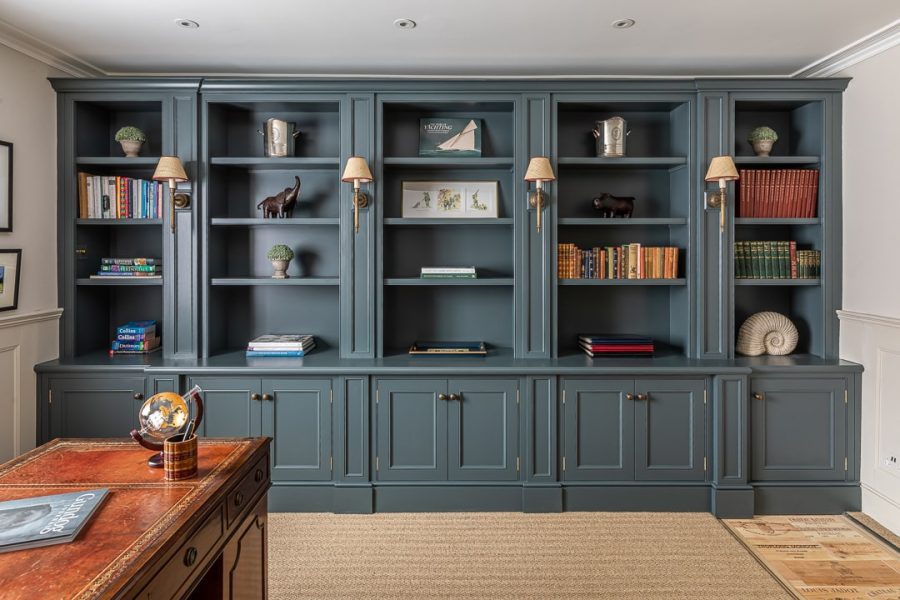
A prime illustration of functional artistry is exemplified by bespoke storage. Although readily accessible shelving units provide fundamental storage solutions, they frequently fall short in terms of structural robustness and visual appeal necessary for a sophisticated interior. Bespoke joinery enables the design of comprehensive wall-to-wall library systems or integrated alcove storage that distinctly characterises a space. These units are capable of integrating illumination, charging stations, and designated aperture sizes to suitably house a collection of books, artwork, or memorabilia. These bespoke joinery pieces frequently feature concealed fixings and integrated frameworks that create the illusion of floating shelving or seamless integration with the wall, elevating a simple surface into the focal point of refined design.
The selection of materials constitutes another significant factor influencing the decision to opt for bespoke joinery. Standard items are typically confined to a limited selection of finishes, whereas a proficient joiner has the capability to procure and work with virtually any timber, veneer, or composite finish specified. Homeowners have the freedom to make sure that their bespoke joinery blends in seamlessly with existing architectural elements, flooring, or colour schemes. For instance, a householder may request kitchen cabinets crafted from a particular quarter-sawn oak to complement the original beams or commission a striking piece in a dark walnut veneer to evoke a sense of gravitas. The tactile refinement and profundity of finish attainable in high-quality bespoke joinery are unmatched and constitute a fundamental aspect of its sustained popularity.
Bespoke joinery also provides unparalleled aesthetic control. It is an ideal opportunity for designers, as it eliminates the constraints imposed by bulk production schedules. Every element, ranging from the moulding profile to the manner of the handle recess, is selected collaboratively by the client and the designer. This careful attention to detail is what elevates bespoke joinery from a mere fixture to an architectural element. It enables the incorporation of distinctive design features, such as curved doors, chamfered edges, or engraved detailing, which would be impractical or infeasible to manufacture on a mass production line. The extensive potential for customised design ensures that no two bespoke joinery projects are identical, rendering each final installation a genuinely distinctive statement.
The renewed interest in traditional interior design has also increased demand for bespoke joinery, notably wood panelling. Historically a key element in grand residences, decorative panelling is now being reimagined for contemporary interiors. Custom joinery enables a panelling system to be tailored to existing features such as doorways, windows, or radiators, resulting in a unified and elegantly finished wall surface. The precision of bespoke joinery ensures that the timber is precisely scribed to the ceiling and floor, providing a luxurious, sound-dampening, and insulating effect. This type of architectural impact cannot be purchased off the shelf; bespoke joinery must be commissioned.
The process of commissioning bespoke joinery is an experience in and of itself, fostering collaboration and transparency. It generally commences with an in-depth consultation, progresses through the preparation of technical drawings, and concludes with the precise craftsmanship and fitting process. This collaboration guarantees the client’s active participation at each phase, offering reassurance and ensuring that the final product precisely aligns with the specified requirements. The relationship established with the joiner is characterised by trust and professional expertise, qualities that are often absent when acquiring pre-fabricated products. The craftsmanship evident in bespoke joinery is immediately apparent in the precise fit, the smooth operation of doors and cabinets, and the impeccable finish.
The economic rationale for selecting bespoke joinery is frequently regarded as an investment rather than simply an expense. The long-term value that bespoke joinery adds to a property is substantial, despite the fact that its initial cost is typically higher than standard options. Premium, bespoke fixtures are exceptionally durable and exhibit greater resistance to the wear and strain that typically impacts lower-quality, mass-produced products. Furthermore, prospective purchasers frequently acknowledge and appreciate the exceptional quality and seamless integration of bespoke joinery, perceiving it as an immediate enhancement to the home’s craftsmanship and finish, thereby positively influencing its resale value. The durability and enduring aesthetic of deftly crafted bespoke joinery suggest it is unlikely to necessitate replacement for many decades, thereby justifying the initial investment.
In conclusion, the increasing prominence of bespoke joinery reflects a broader movement towards quality, sustainability, and individual expression within the home. From the intricate geometry necessary for customised cabinets in a challenging corner to the impactful presentation of a flawlessly installed run of wood cladding, the bespoke approach enables homeowners to craft genuinely functional works of art. The capacity to specify exact dimensions, select distinctive materials, and achieve a flawless integration within any architectural setting offers an exceptional degree of satisfaction. Selecting bespoke joinery involves more than simply obtaining storage solutions or decorative features; it constitutes an investment in a meticulously crafted living environment that embodies personal style, improves everyday living, and endures over time.