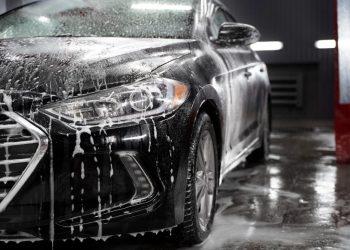


When it comes to business vehicles, they are rarely simply that. It serves as a moving advertisement, a mobile office, a customer-facing touchpoint, and, in many circumstances, a valuable financial asset. For years, keeping company cars, vans, and trucks clean was considered an afterthought, leaving to drivers with a bucket and sponge or a quick trip to the local automatic wash. That mentality is shifting quickly. Across the UK, businesses of all sizes are understanding that expert vehicle maintenance yields demonstrable results, and commercial valeting services are becoming a normal component of fleet management rather than an occasional luxury.
The reasons include pragmatic, financial, and reputational. Understanding them explains why so many businesses are reconsidering how their vehicles are maintained.
First impressions travel with four wheels.
Customers develop opinions in seconds, and a company vehicle is frequently the first item they notice. A sales professional arriving in a dirty car or a delivery van covered in road film sends a message about standards that no pristine brochure can repair. In contrast, a clean, well-presented vehicle conveys care, dependability, and attention to detail.
This is especially relevant for firms that rely on trust. Estate brokers, healthcare providers, contractors, transportation businesses, and professional advisors all understand how presentation affects perception. Commercial valeting services enable these businesses to maintain a consistently high level across all vehicles, regardless of who is driving or how busy the week has been. Consistency is the essential word here. One beautiful vehicle amid a dozen neglected ones adds little to a brand, but a uniformly smart fleet emphasises professionalism wherever it travels.
There is also the issue of visibility. Liveried trucks provide continuous advertising. Dirt obscures logos, contact information, and trademark colours, quietly wasting the money invested in them. Regular expert cleaning by commercial valeting services ensures that the advertising works as intended.
Preserving the value of expensive assets
Vehicles are among the most expensive expenses a business will incur, and their condition has a direct impact on what they are worth when it comes time to sell or return them. Leased vehicles are especially important in this regard, as excess wear and interior damage can result in high end-of-contract fees. Stains on upholstery, embedded grime in carpets, and paintwork faded by months of contamination all depreciate a vehicle.
Professional valeters utilise techniques and chemicals that protect surfaces rather than just cleaning them. Paintwork is treated to remove pollutants without scratching, interiors are cleaned using procedures appropriate for diverse materials, and minor issues are identified before they become costly ones. Many firms neglect this preventative feature. A valeter who observes early corrosion, a ripped seat, or a failing seal can report it in a timely manner, saving money later.
Over a vehicle’s life, the difference between regular professional care and occasional amateur cleaning might be significant. Companies that invest in commercial valeting services frequently discover that their vehicles retain greater value and require less expensive reconditioning jobs before resale.
Health, hygiene, and safety in the mobile workplace
The epidemic altered expectations regarding hygiene in all environments, including vehicles. When employees share cars or vans, touchpoints like steering wheels, gear levers, door handles, and dashboards can harbour bacteria and allergies. For firms with a responsibility of care to their employees, this is not a minor issue.
Professional valeting is much more than just wiping down the surface. Trained workers apply suitable sanitising methods, reach regions that are frequently overlooked, and address odours at their source rather than disguise them. This level of sanitation can be critical for organisations moving people, food, medical supplies, or other delicate commodities, and it is required by regulation in some industries.
Another factor that is underappreciated is safety. Dirty windscreens, smeared mirrors, clouded lights, and blocked number plates all impair vision and pose a risk on the road. A fully cleaned and frequently maintained vehicle is simply a safer vehicle to drive. Many employers now regard commercial valeting services as a minor addition to their overall health and safety duties.
Giving time back to those that matter.
One of the most compelling reasons to outsource vehicle cleaning is the time saved. When drivers or administrative staff are required to clean vehicles themselves, the hours add up. A delivery driver who spends forty minutes washing a van at the end of his job is not resting, preparing for the next day, or making money. A member of the office staff in charge of arranging cleaning throughout a fleet gets diverted from work that requires their talents.
Professional teams completely remove this load. Many suppliers work on-site, at a depot, office car park, or even an employee’s driveway, to clean vehicles while they are idle. There is no reason to divert cars’ routes or lose them for half a day. For fleet managers managing scheduling, servicing, compliance, and driver wellbeing, simplicity is a huge benefit.
Morale is also an important consideration. Drivers often prefer being given a clean, new vehicle at the start of the day, and they take more satisfaction in a fleet that the firm clearly values. In a competitive labour market, modest gestures like this help to increase employee happiness and retention.
Understanding the real expense of doing it in-house.
At first appearance, internal vehicle cleaning may appear to be less expensive. On closer study, the image is rarely as simple. Businesses must account for equipment, cleaning supplies, water and power, storage, training, and the compensation of those who perform the labour. When you consider the possibility of damage caused by inappropriate products or bad technique, the apparent savings begin to dwindle.
Commercial valeting services often have predictable cost, which is commonly determined by contracts tailored to a fleet’s size and number of visits. This simplifies budgeting and eliminates the hidden expenditures that arise when cleaning is done informally. Professionals also work effectively, having developed their procedures over thousands of vehicles, doing the job faster and to a higher standard than most in-house attempts.
Scale is also an important consideration. As a fleet expands, so does the logistical problem of maintaining each vehicle clean. Outsourcing helps a business to grow without having to create its own cleaning operation.
A more responsible approach toward the environment
Environmental awareness has become a boardroom issue, and corporations are under increasing pressure to exhibit responsible operations. Traditional vehicle cleaning can be inefficient, using a lot of water and allowing detergents to spill down drains. Many modern providers have responded by using waterless and low-water procedures, biodegradable materials, and careful waste management.
These approaches can significantly cut water consumption while still producing a good finish. For businesses working toward sustainability goals or reporting on their environmental effect, selecting commercial valeting services that use responsible practices is a simple approach to make progress. It also helps to minimise the regulatory and reputational concerns that come with uncontrolled runoff from informal washing on business premises.
Flexibility that suits modern fleets
Modern fleets are diverse. A single company may operate small cars, panel vans, minibuses, specialist vehicles, and executive saloons, all with varied cleaning requirements. Professional providers are equipped to manage this diversity, providing everything from a fast external refresh to a thorough interior repair.
Many offer flexible scheduling, whether it’s weekly maintenance visits, monthly deep cleans, or one-time preparation for a contract handover or company event. This elasticity is ideal for organisations with changing demands, since it allows them to scale services up or down without making long-term commitments that no longer fit.
A prudent investment, not an indulgence.
The increased popularity of commercial valeting services reflects a larger shift in how businesses perceive their vehicles. Rather than seeing cleanliness as a cosmetic, forward-thinking businesses view it as part of a larger strategy that includes brand reputation, asset value, employee well-being, safety, efficiency, and environmental responsibility.
The evidence is practical, not theoretical. Cleaner cars provide better impressions, retain their worth for longer, provide healthier working environments, and allow employees to focus on their primary responsibilities. When those advantages are balanced against the expense and effort of performing the work internally, outsourcing becomes a more rational option.
As competition heats up and customer demands rise, seemingly tiny nuances become distinguishing features. A pristine vehicle pulling up outside a client’s location reveals something about the company. For an increasing number of businesses, commercial valeting services are the most straightforward and dependable approach to ensure that the message is always correct.