
More and more people and companies are realising the need of having a plan in place to deal with medical crises, which has led to a surge in the popularity of first aid courses in recent years. This newfound enthusiasm is indicative of a generalised understanding of the importance of first aid training in preventing harm, alleviating suffering, and boosting self-assurance under pressure. A first aid training is now an essential component of any comprehensive safety plan, whether it be for a home, school, workplace, or public environment.
The convenience and ease of access to the first aid course is a major factor in its rising popularity. People of all walks of life and skill levels will find the first aid course to be more accessible and practical than other specialised training programs. This content is designed to provide participants with the skills and information they need for everyday living in a way that is both easy to understand and applicable. Because of its welcoming nature, the first aid course has become a favourite among those who want to boost their self-assurance and competence.
The first aid training has become quite popular due to its usefulness in the workplace. Employers are more dedicated than ever to provide first aid training to their personnel in response to stricter health and safety regulations. Workers who have taken a first aid course are more equipped to handle medical crises, such as those involving the administration of cardiopulmonary resuscitation (CPR), the control of bleeding, and the identification of stroke symptoms. Aside from meeting compliance requirements, these abilities also make the workplace safer and show that the organisation cares about its employees’ health and safety.
An important resource for families and carers in the home environment is the first aid training. More and more people, especially parents, are seeing the need of being prepared to deal with medical emergencies involving their children by taking a first aid course. The knowledge and confidence that comes from taking a first aid course equips participants to handle a wide range of medical emergencies, including burns, choking, and allergic reactions. Being well-prepared is crucial for reducing dangers and protecting loved ones.
Awareness of the first aid course’s life-saving potential is on the rise, which is one reason why it’s so popular. In cases of cardiac arrest, serious injuries, or breathing problems, prompt action is necessary, frequently prior to the arrival of expert medical assistance. Taking a first aid training gives people the knowledge and self-assurance they need to respond quickly in an emergency, which might save lives and lessen the severity of the situation. This information is particularly helpful in densely populated or outlying places where emergency services could take longer to arrive.
Anyone looking to make a positive impact in their community can also find something to their liking in the first aid training. People can help one another more easily in classrooms, on school grounds, and other social situations if they learn basic first aid. Many have been compelled to take a first aid course because they see the importance of doing so in building safer, more inclusive communities. Furthermore, after finishing a first aid course, many people feel compelled to teach others what they’ve learnt and encourage them to do the same.
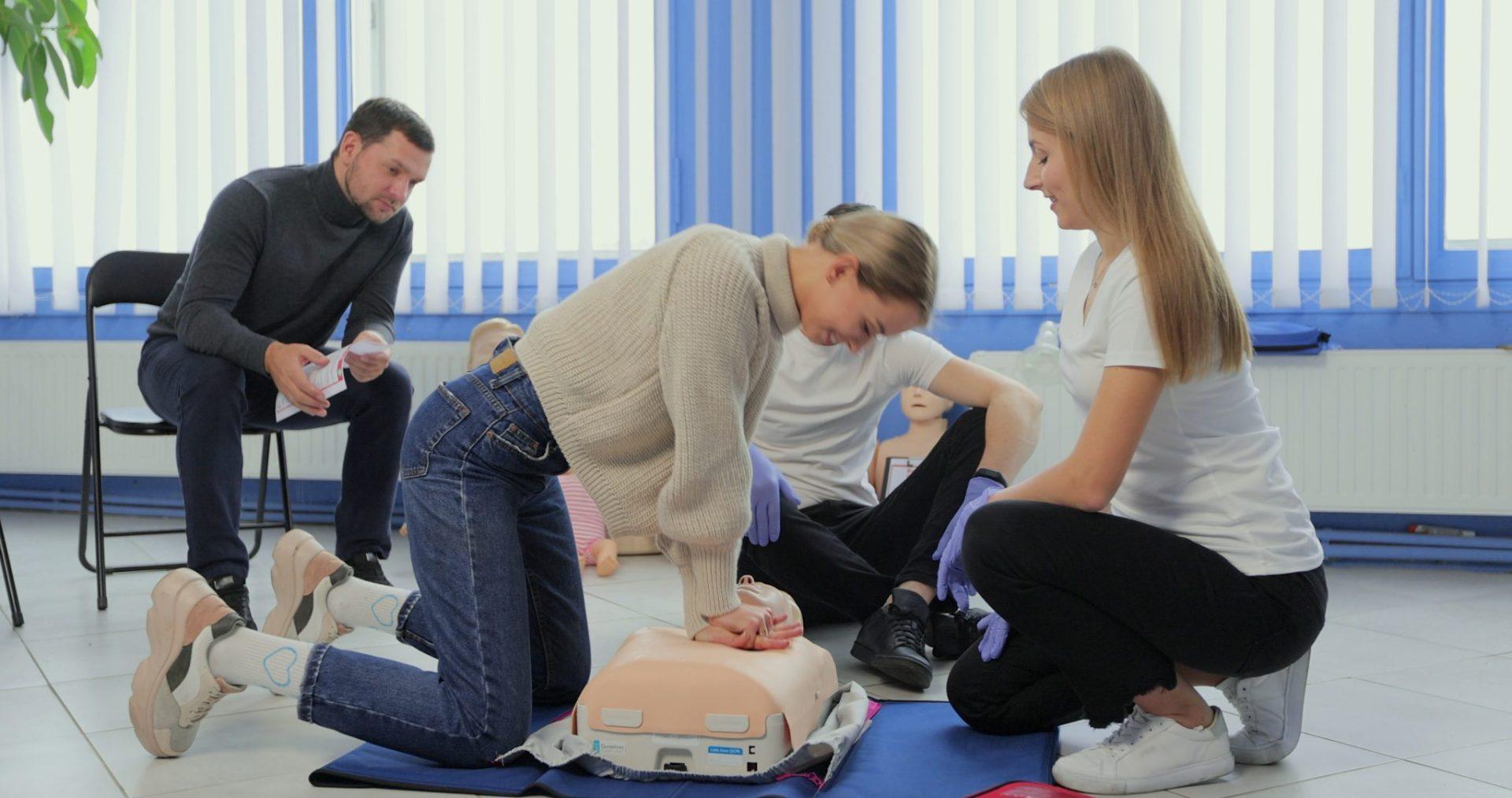
The first aid training is popular for several reasons, one of which is how useful it is. Participants are able to practise procedures and develop muscle memory through the first aid course’s emphasis on hands-on learning, as opposed to theoretical instruction. Participants will gain confidence in their abilities to apply what they have learnt through interactive activities, guided demonstrations, role-playing scenarios, and reinforcement of the subject. The appeal of the first aid course is increased by the fact that it is an interesting and gratifying experience thanks to its experiential approach.
The first aid course has been growing in popularity, and educational institutions are a big part of it. First aid is a skill that many schools, colleges, and universities have begun to include in their curricula because of the importance of teaching students. College students are learning how to respond to catastrophes on campus and in the real world. As a vital part of individual growth and readiness, the first aid training is increasingly being included in educational programs.
First aid training has also seen a surge in popularity alongside the popularity of adventure sports and other outdoor pursuits. Anyone who enjoys being outside and doing things like hiking, camping, climbing, etc. is well aware of the dangers that come with it. Participants in a first aid training will be better equipped to deal with accidents and other emergencies in off-the-beaten-path areas when medical personnel may be slow to respond. Taking a first aid course may give you the confidence and practical skills you need to enjoy outdoor activities without worrying about getting hurt.
There is no way to emphasise the importance of taking a first aid training for your mental health. Anxieties and a lack of control over the situation are alleviated when one knows what to do in an emergency. Participants in a first aid training learn to regulate their emotions and respond appropriately in dangerous situations. Attending a first aid training may greatly improve one’s emotional resilience, which in turn increases one’s capacity to handle difficult situations.
It is essential to take the first aid course if you want to work in healthcare, teaching, childcare, or public service. First aid certification is frequently a prerequisite for or an integral component of the training program for several occupations. In addition to meeting these requirements, taking a first aid course equips participants with marketable skills that boost their employability. Aspiring professionals often choose the first aid course because it satisfies their employment goals while also providing them with valuable lifesaving skills.
The first aid training has many benefits, including those for one’s career and one’s personal life, but it also provides opportunities for self-improvement and fulfilment. By the end of the course, everyone is more alert to their immediate environment and takes more personal responsibility to ensure their own and others’ safety. A sense of long-lasting pride and achievement is achieved when one realises that their actions may have a positive impact on someone’s life, be it by saving a life, alleviating suffering, or averting more harm.
There has been a surge in enrolment for first aid classes due to the topic’s rising profile in public awareness campaigns and the media. Hearing about people who have saved lives thanks to their first aid training motivates others to do the same. People are encouraged to take proactive measures, such as enrolling in a first aid course, via public awareness programs that stress the significance of being prepared for crises.
Because of the wide variety of scenarios in which the skills taught in a first aid course are useful, it has quickly become an essential component of both professional and personal growth. As more and more people and groups see its value in making communities safer, giving people more agency, and encouraging a mindset of readiness, its popularity is skyrocketing. Taking a first aid training is a great way to boost your confidence, learn new skills, and have a good impact on your community.